Dental Implants Calabasas CA and Cosmetic Dentistry
A healthy smile sits at the intersection of function, comfort, and appearance. That is why conversations about dental implants and cosmetic dentistry often overlap, especially in a place like Calabasas, where patients tend to be thoughtful about both long-term oral health and how their teeth look in daily life. A missing tooth is not only a cosmetic issue. It can change the way you chew, affect speech, shift neighboring teeth, and gradually alter the shape of the jaw. At the same time, even a strong, healthy bite can leave someone self-conscious if stains, chips, spacing, or worn enamel make the smile look older than it feels.
For many patients, the real question is not whether to choose health or aesthetics. It is how to build a treatment plan that respects both.
When people search for Dental Implants Calabasas CA, they are often dealing with more than one concern at a time. They may have lost a tooth years ago and finally be ready to replace it. They may be frustrated with a loose denture. They may want a more attractive smile but know that whitening and veneers alone will not solve structural problems. Good dentistry starts by sorting out what matters most, what must be addressed first, and what can be layered in thoughtfully.
Why implants changed restorative dentistry
Before dental implants became mainstream, replacing a missing tooth usually meant a bridge or a removable appliance. Bridges still have a place, and in some cases they remain a practical option. But they require support from adjacent teeth, which may involve reshaping healthy enamel. Removable partial dentures can fill spaces, though many patients never fully adapt to the movement, bulk, or maintenance.
Implants changed that equation because they replace the root as well as the crown. The implant is placed into the jawbone, where it integrates over time. Once healed, it supports a custom restoration that looks and functions much more like a natural tooth than older alternatives often could.
That bone relationship matters. When a tooth is lost, the bone in that area no longer gets the same stimulation during chewing. Over time, the ridge can shrink. Patients sometimes notice this only when they compare old Dental Implants Calabasas CA oaksdentistry.com photos or realize their facial contours look slightly different around the mouth. In the back of the mouth, bone loss may be hidden for years. In the front, even small volume changes can affect smile design.
This is one reason treatment timing matters. Someone who replaces a tooth soon after extraction may have a more straightforward path than someone who waits ten or fifteen years. That does not mean late treatment is off the table. It simply means the plan may require grafting or more careful sequencing.
The cosmetic side of implants
An implant is often discussed as a restorative procedure, but the cosmetic piece is inseparable from the final result. Patients do not just want a tooth in the space. They want it to blend in. That means the crown shape, shade, translucency, and gum contours have to work with the rest of the smile.
Front teeth are where artistry matters most. A central incisor that is technically well placed but too opaque, too square, or slightly out of line can draw attention immediately. The same applies to the gumline. If one side sits higher or flatter than the matching tooth next to it, the eye catches the asymmetry even if the patient cannot name what feels off.
This is where cosmetic dentistry and implant dentistry meet. Smile design principles guide the final restoration. Tooth proportion, incisal edge position, lip movement, and soft tissue symmetry are not vanity details. They are part of what makes treatment look natural rather than obvious.
In practical terms, a patient may begin with an implant consultation and eventually discuss whitening, contouring, bonding, or veneers on surrounding teeth so the final result does not make one new crown stand out in a tired smile. That is not upselling when it is done ethically. It is planning the whole picture.
Who is a good candidate for dental implants
Most healthy adults can be considered for implants, but candidacy depends on more than interest and budget. Bone volume, gum health, bite forces, medical history, and habits such as smoking all affect success. Patients with well-managed diabetes may do very well. Patients with active periodontal disease need that condition stabilized first. Someone who grinds heavily at night may still be a candidate, but the restorative design and protective nightguard become more important.
Age is less of a barrier than many people think. A healthy person in their seventies may be a better implant candidate than a younger person with uncontrolled gum disease and poor home care. The jawbone and soft tissues are what matter, along with the patient’s ability to maintain the work once it is complete.
A good evaluation usually includes a clinical exam, detailed imaging, and a conversation about goals. Not every missing tooth should automatically be replaced with an implant. If a patient has multiple problems, there can be a wiser order to treatment. Pain, infection, unstable teeth, and gum disease should be handled before cosmetic refinements begin.
What the process actually looks like
Patients are often surprised by how methodical implant treatment is. It is not usually a one-visit fix, although modern workflows have made things more efficient. After planning, the implant is placed in bone. Then healing begins. In many straightforward cases, the integration period may take a few months. Some situations allow for immediate temporization, especially in visible areas, but that decision depends on stability and risk.
If the site has limited bone, grafting may be recommended either at the time of extraction, before implant placement, or during the procedure itself. This can sound intimidating, but grafting is a routine part of implant dentistry. In real practice, it is often the difference between forcing a compromised implant into a poor site and building a stable foundation first.
Once the implant integrates, the restorative phase begins. Impressions or digital scans capture the exact position. The final crown is then designed with the bite, neighboring teeth, and aesthetics in mind. In the front of the mouth, this stage may involve trying temporary shapes to test the way gums respond and to refine appearance before the definitive crown is made.
The sequence tends to feel easier for patients when they know what each phase is accomplishing. Treatment is rarely just waiting. Each stage protects the long-term result.
Cosmetic dentistry beyond implants
A smile makeover does not always require major work, and not every aesthetic concern calls for veneers. Cosmetic dentistry can range from subtle polishing and whitening to comprehensive rehabilitation. What matters is choosing the least invasive approach that solves the actual problem.
Teeth that look uneven may simply be worn. Minor bonding can restore edge length without committing to full-coverage restorations. Discoloration might respond beautifully to whitening, unless the cause is intrinsic staining, old restorations, or trauma. Small spaces can sometimes be closed with clear aligners, while other cases are better suited to bonding or veneers depending on bite and proportions.
What experienced clinicians learn over time is that cosmetic treatment only lasts when it respects function. Beautiful porcelain placed on an unstable bite tends to chip. Whitening done on a mouth with untreated decay and leaking fillings is not thoughtful care. Patients appreciate candid recommendations when the explanation is clear. Most people are willing to do things in the right order if they understand why.
Where implants fit into a larger smile plan
Some of the best cosmetic outcomes come from blending disciplines rather than relying on a single procedure. Consider a patient who lost a lateral incisor years ago, has slight crowding, and wants a brighter smile overall. The most elegant solution may involve orthodontic alignment first, implant placement second, and whitening after healing so the final crown can be matched to the refreshed tooth color. If the order is reversed, the aesthetic result can be harder to harmonize.
Another common situation involves posterior implants. A patient may not think a missing molar affects appearance because it is out of sight. Yet restoring that tooth can stabilize the bite and support future cosmetic work on the front teeth by distributing chewing forces more evenly. That is a less glamorous part of dentistry, but it matters. Long-term beauty depends on quiet mechanics.
Common concerns patients bring to the consultation
Most implant and cosmetic consultations revolve around a handful of practical worries. Patients want to know if the procedure will hurt, how long it will take, whether it will look natural, and what can go wrong. Those are fair questions.
Discomfort is usually more manageable than people expect. Surgical placement often feels easier than the anticipation. The recovery varies by case, of course, but many patients describe a few days of tenderness rather than severe pain. The bigger variable is complexity. A single implant in a healthy site is different from full-arch reconstruction or a case involving multiple grafting procedures.
Time is another concern. Cosmetic procedures such as whitening or bonding can move quickly. Implant treatment generally asks for patience. That delay can frustrate people who want immediate results, but rushing biology is rarely worth it. Bone and gum tissue heal on their own timeline.
Appearance is where trust matters most. An implant crown should not look like a chiclet or a spotlight. It should match the smile around it. This requires communication between the dentist, surgeon if there is a separate specialist involved, and the lab fabricating the restoration. In cosmetic cases, a good team sweats details that patients may never consciously notice, and that is exactly the point.
Questions worth asking before you commit
Patients do not need to arrive at a consultation fluent in dental terminology, but a few well-aimed questions can make decision-making much easier.
- What are the realistic options for my case, and why do you recommend this one?
- Will I need grafting, gum treatment, or orthodontic work before the final cosmetic phase?
- How will the implant or restoration be matched to my other teeth?
- What is the expected maintenance over the next five to ten years?
- What are the main risks or limitations specific to my mouth?
These questions tend to reveal whether the plan is individualized or generic. They also help patients understand that excellent cosmetic dentistry is not only about the day the case is delivered. It is about how well it holds up after years of coffee, stress, travel, clenching, and normal life.
The role of technology, and its limits
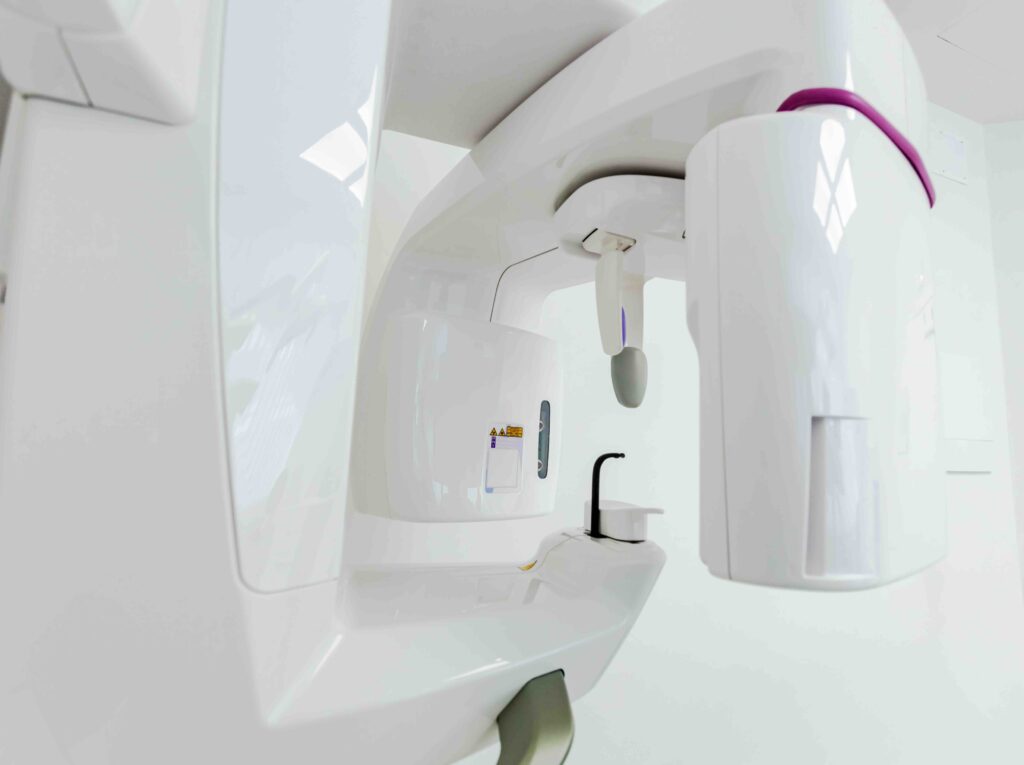
Digital scanning, 3D imaging, guided surgery, and advanced ceramics have all improved implant and cosmetic workflows. These tools can increase precision, reduce remakes, and help patients visualize outcomes before treatment starts. In implant cases, CBCT imaging provides a far clearer view of bone dimensions and anatomical structures than traditional two-dimensional films alone. In cosmetic planning, digital mockups can help align expectations.
Still, technology is not judgment. A scanner does not decide whether a patient is better served by a conservative bonded solution or a more aggressive restorative plan. Software does not replace the clinician’s feel for gum biotype, smile line, or parafunctional habits. The best outcomes come from pairing good tools with restraint and experience.
A natural smile has character. It is not always mathematically perfect, and it should not look mass-produced. That is one place where over-designed dentistry can miss the mark. The goal is often believable improvement, not a blindingly uniform row of identical teeth.
Maintenance is where success is proven
One of the most persistent myths in dentistry is that implants are maintenance-free because they cannot get cavities. It is true that an implant will not decay the way a natural tooth does. But the surrounding tissue can still become inflamed, and bone can still be lost if plaque control is poor or the bite is overloaded. Cosmetic work has similar realities. Veneers, bonding, and crowns can last well, but they are not indestructible.
Patients who do best over the long term usually adopt a few habits consistently:
- They keep regular hygiene and exam visits.
- They clean around implants carefully, including hard-to-reach areas.
- They wear a nightguard if they clench or grind.
- They address small chips, looseness, or gum irritation early.
- They understand that maintenance is part of protecting the investment.
This is where experienced dental teams often sound repetitive, but for good reason. Beautiful dentistry can fail quietly before it fails dramatically. A little bleeding around an implant, a crown that starts to feel high, or a bonded edge that chips slightly may seem minor. Catching those issues early usually keeps them minor.
Cost, value, and the danger of shortcut thinking
Dental treatment in Calabasas spans a wide range of fees, just as it does in other communities where patients have access to both basic and highly customized care. That range exists because cases vary, materials vary, and the amount of planning varies. A single straightforward implant crown case is not the same as a front-tooth replacement with tissue grafting and cosmetic refinement. Whitening trays are not comparable to layered porcelain work by a skilled ceramist.
Price matters. Patients are right to consider it carefully. But value in dentistry is rarely visible on day one. It shows up in fit, gum stability, the quality of the bite, the natural appearance in different light, and whether the work still serves the patient years later. Cheap treatment can become expensive when it must be redone, especially if revision means repairing lost bone or correcting aesthetic compromises.
That does not mean the highest fee is automatically best. It means patients should look for clarity. They should understand what is included, how the case is sequenced, who is responsible for each part of treatment, and what maintenance will likely look like. Thoughtful dentistry is transparent about trade-offs.
A local perspective on Dental Implants Calabasas CA
Patients seeking Dental Implants Calabasas CA are often balancing a very practical desire with a very personal one. They want to eat comfortably, smile without thinking about it, and choose treatment that does not feel makeshift. In a community where appearance often carries professional and social weight, cosmetic outcomes matter. Yet the smartest patients, and the strongest clinicians, understand that the best cosmetic result rests on healthy structure underneath.
That local demand has pushed many practices to integrate restorative, surgical, and aesthetic planning more tightly than in the past. Patients now expect a discussion that covers function, materials, healing time, and appearance in one coherent conversation. They should expect that. A missing tooth is not separate from the smile around it, and cosmetic treatment should never be separate from the health of the mouth supporting it.
Choosing a practice that sees the whole picture
The right office for implant and cosmetic treatment is not always the flashiest one. It is the one that listens closely, explains plainly, and can show a pattern of sound judgment. Sometimes the best sign is not a glamorous before-and-after gallery. It is the willingness to slow down, stabilize gum health, or recommend a conservative option when a bigger procedure is technically possible but not truly necessary.
Patients benefit from asking how the team plans complex cases, whether specialists collaborate when needed, and how temporary restorations are used to refine the final result. Those details say a lot about the quality of care. Good implant and cosmetic dentistry is both technical and deeply human. It should leave the patient feeling more like themselves, not like they borrowed someone else’s smile.
For anyone considering treatment, the most useful first step is a thorough evaluation that does not rush past the basics. The strongest plans tend to be the ones built from the bone up, the gumline out, and the patient’s real goals at the center. That is where restorative dentistry and cosmetic dentistry stop competing and start working together.
Oaks Dental
5000 Parkway Calabasas, Suite 308
Calabasas, CA 91302, United States
Phone: +1 (818) 412-8349
FAQ About Dental Implants Calabasas CA
How much does a dental implant cost in California?
Costs vary with the number of teeth replaced, restoration type, imaging, and any extractions or bone grafting. Request an itemized estimate after an examination; a single advertised price may not include every treatment stage.
Can people with autoimmune disease get dental implants?
Some people may qualify, but the condition, medications, oral health, and healing risks require individual assessment. Share your medical history with your dentist, who may coordinate with your treating physician.
Can you have dental implants if you have osteopenia?
Osteopenia does not by itself establish whether implants are suitable. Your dentist must evaluate jawbone support and review bone-related medications and other risks before recommending treatment.
Ends · MYLESLRXF799