Dental Implants for One Missing Tooth vs Several Missing Teeth
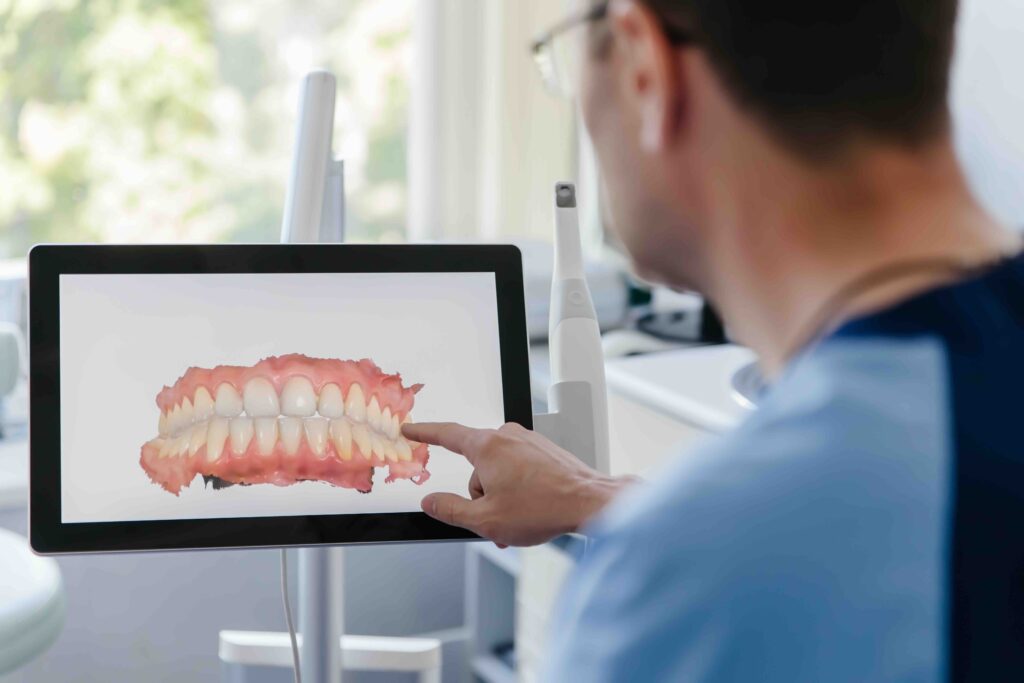
Losing one tooth creates a very different clinical problem from losing several, even when the spaces sit side by side. Patients often assume the answer is straightforward: one implant for one tooth, several implants for several teeth. In practice, treatment planning is more nuanced than that. The number of missing teeth matters, of course, but so do the quality of the bone, the condition of the neighboring teeth, the bite, the gumline, the patient’s health history, and the expectations around appearance, comfort, and long-term maintenance.
That is why two people can both be told they need Dental Implants and still leave the consultation with completely different plans. One may be an ideal candidate for a single implant crown placed into a healthy site with abundant bone. Another may need a combination approach, perhaps two implants supporting a three-tooth bridge, or four implants restoring an entire arch. The principles overlap, but the trade-offs are not the same.
One missing tooth changes more than appearance
A single missing tooth often looks like a small problem from the outside. It may be one upper premolar hidden when you smile, or one lower molar that “isn’t visible anyway.” Yet even a single gap starts to affect the mouth in ways that tend to become more obvious over time. Adjacent teeth can drift. The opposing tooth may begin to over-erupt into the open space. Food traps become more common. Biting forces shift.
I have seen patients put off replacing one tooth because they could still chew on the other side. Five years later, the discussion was no longer about a simple implant crown. It had become a conversation about bone shrinkage, crowding, a tilted neighboring molar, and the need for orthodontic correction before implant placement. One missing tooth is often the easiest implant case to restore, but usually only if it is treated before the site collapses.
For a single missing tooth, a Dental Implant is often considered the most conservative fixed option because it replaces the root and crown without cutting down the teeth next to it. That matters. A traditional bridge can be excellent in the right case, but it usually requires preparing the neighboring teeth for crowns. If those teeth are pristine and healthy, many clinicians and patients prefer to leave them alone.
What a single-tooth implant actually involves
The ideal single-tooth implant case is fairly elegant. A titanium implant is placed in the jawbone where the missing root used to be. After healing and integration, an abutment and crown are connected to create a replacement tooth that emerges naturally through the gum.
When everything lines up, the process is efficient and predictable. The patient has a healthy jaw, no uncontrolled periodontal disease, adequate bone width and height, and a stable bite. The soft tissue around the site is thick enough to support a natural-looking gum contour. If the missing tooth is in the front of the mouth, that tissue profile becomes especially important. In the aesthetic zone, the challenge is not just osseointegration. It is making the implant disappear into the smile.
That is where single-tooth implants can become deceptively demanding. Replacing one upper front tooth after trauma, for example, may be harder than replacing two lower molars. The surgeon and restorative dentist must preserve or recreate the gum architecture, match the shape and color of the adjacent natural tooth, and ensure the crown sits in the precise position. A fraction of a millimeter matters. If the gum scallop is uneven or the implant sits slightly too far facially, the result can function well and still look artificial.
By contrast, a single missing molar in the back tends to place more emphasis on load management than cosmetics. Those implants absorb significant bite force. The crown design, the width of the implant, the opposing dentition, and habits such as clenching all influence success. A patient who grinds heavily at night may need a nightguard to protect the restoration.
Several missing teeth create a different set of decisions
When multiple teeth are missing, the question shifts from “Can we replace this tooth?” to “What is the smartest way to rebuild function across this span?” That opens more than one possible route. A patient missing three teeth may not need three separate implants. Sometimes two implants can support Dental Implants oaksdentistry.com a three-unit implant bridge. Sometimes one implant is placed now and another later, depending on budget, bone, or staging. If many teeth are absent, a full-arch solution may make more biological and financial sense than placing an implant for every tooth.
This is where treatment planning becomes less formulaic. With several missing teeth, spacing becomes critical. So does the location of the gaps. Several missing front teeth require careful management of smile line, lip support, and gum symmetry. Several missing back teeth raise questions about chewing efficiency, bite collapse, and whether the remaining teeth are taking too much force.
I often explain it this way to patients: one missing tooth is usually a local problem. Several missing teeth often become an engineering problem. The restoration has to distribute force wisely, remain hygienic, support speech and appearance, and fit within the limitations of the available bone.
Why “one implant per tooth” is not always the right answer
Patients are often surprised to learn that replacing three teeth does not automatically mean three implants. In some situations, placing one implant for every missing tooth is unnecessary or even less practical. Implants need adequate space between each other and between adjacent roots. They also require enough bone around them for long-term stability. If the span is narrow or the bone has resorbed unevenly, fewer strategically placed implants may offer a better outcome.
An implant-supported bridge can work extremely well for several missing teeth in a row. Instead of placing an implant in every empty socket, the dentist may place implants at the ends, or at carefully chosen positions, and connect a bridge across the span. This can reduce surgical complexity and cost while still providing strong support.
That said, there are trade-offs. A longer implant bridge can be harder to clean than a single implant crown. If one component develops a problem, the restoration design may make repairs more involved. Forces across the bridge must be managed carefully, especially in patients who brux. There is no universal winner. The best plan balances biology, mechanics, and maintenance.
Bone loss becomes a bigger story with multiple missing teeth
Bone shrinks after tooth loss. That happens with one tooth, but the effect becomes more significant when several teeth are missing or have been absent for a long time. Horizontal and vertical bone loss can limit implant placement and influence where the final teeth can be positioned.
With one recently lost tooth, especially if the socket is preserved, a dentist may be able to place an implant with minimal augmentation. With several missing teeth, especially in older extraction sites, bone grafting is more common. In the upper back jaw, sinus enlargement can reduce available bone height. In the lower jaw, the location of the nerve limits implant length and angulation. In the front, loss of facial bone affects appearance.
These issues do not mean implants are off the table. They simply mean the plan may involve more staging. A patient missing one tooth after an accident may need a graft to preserve contour. A patient missing several molars for fifteen years may need sinus grafting or shorter implants, depending on anatomy. Full-arch cases often use angled implants to work around bone limitations and avoid more extensive grafting. The field has become more adaptable, but anatomy still sets the rules.
Cost is not linear, and that surprises many patients
One of the most common misunderstandings is that several missing teeth will cost exactly three or four times as much as one missing tooth. Sometimes that is close. Often it is not.
A single implant case includes diagnostics, surgery, healing components, the abutment, and the crown. Multiply that by several sites and the numbers add up quickly. Yet when multiple teeth are restored as a bridge, or when a full-arch approach is used, the per-tooth cost often changes because the restoration is shared across fewer implants.
Here is where expectations need to be realistic. The lower-cost option at the beginning is not always the lower-cost option over fifteen years. A removable partial denture may be less expensive upfront than implants, but some patients struggle with movement, sore spots, reduced chewing strength, or clasp visibility. On the other hand, a complex implant reconstruction with grafting can be a major investment that not every patient wants or needs.
The better question is not “What is the cheapest way to fill the gap?” It is “Which option gives me the function, comfort, and longevity I want, with maintenance I can realistically keep up with?”
How the front of the mouth differs from the back
A single missing front tooth can be the most emotionally charged scenario. Patients see it every day, and everyone else sees it too. Even small imperfections in shade, shape, translucency, or gum height are noticeable. In those cases, the discussion often centers on temporary teeth during healing, tissue sculpting, and the timing of implant placement after extraction.
Several missing front teeth create a different artistic problem. Instead of matching one central incisor perfectly, the clinician may have a little more freedom to create symmetry across a larger restoration. That can help. Yet more missing teeth also means more soft tissue loss and greater risk of a flat or unnatural appearance if the support for the lips and gums is not recreated well.
In the back of the mouth, the priorities usually shift toward durability and chewing performance. A single molar implant must withstand heavy occlusal load. Several posterior implants, or implant bridges, must spread force without overloading the fixtures or trapping food underneath the prosthesis. Patients who say, “I do not care how it looks back there,” still care very much if it feels bulky or if they cannot chew steak comfortably.
Hygiene is simpler with one tooth, but only if the design is right
Single implants are generally easier for patients to understand and clean. The daily routine is intuitive. Brush normally, clean around the implant crown, and keep regular recall visits. Still, even one implant can develop peri-implant inflammation if plaque control is poor or if cement or excess contour makes cleaning difficult.
With several missing teeth restored on implants, hygiene becomes more technique-sensitive. The patient may need floss threaders, interdental brushes, a water flosser, or specific instructions for cleaning under a bridge. This is one of the most overlooked parts of treatment planning. A restoration that looks beautiful on delivery day can become a long-term frustration if the patient cannot maintain it.
A useful reality check is to ask not just what the patient wants to wear, but what the patient can care for consistently. An older patient with limited dexterity may do far better with one design than another. A younger patient who is highly motivated and meticulous may manage a more complex prosthesis with ease. The smartest plan is not just surgically possible. It is maintainable at home.
Timing matters more than many people realize
The timing after tooth loss often influences whether treatment stays straightforward or becomes more involved. Some patients are candidates for immediate implant placement at the time of extraction. Others benefit from a healing period first. If infection, gum recession, thin facial bone, or bite issues are present, immediate placement may not be the best choice even if the patient likes the idea of “getting it done in one shot.”
With one missing tooth, timing often affects aesthetics and bone preservation. With several missing teeth, timing can affect the entire sequence of care. A patient may need extractions, temporary teeth, grafting, orthodontics, or periodontal treatment before implants are placed. When many teeth are failing at once, the plan may be staged to preserve comfort and function during the transition.
There is no virtue in rushing a case that needs groundwork. There is also no benefit in delaying without a reason. The right pace is the one that protects the tissues and supports the final result.
Who tends to do well with each approach
Some patients are ideal for a single implant and discover the process is less disruptive than they feared. They lose a tooth from fracture or failed root canal, the neighboring teeth are intact, the bone is healthy, and their oral hygiene is solid. These are often highly satisfying cases because the replacement feels independent and natural.
Patients missing several teeth often benefit from implants even more dramatically because the improvement in function can be substantial. Someone who has been chewing on one side for years, or struggling with a partial denture that rocks during meals, often notices a meaningful change in confidence and comfort once the restoration is stable.
The best candidates across both groups usually share a few traits:
- they keep regular dental appointments and address gum disease
- they understand healing takes time
- they are willing to wear protective appliances if they grind
- they accept that implants need maintenance, not just placement
- they choose a plan based on long-term fit, not only short-term cost
Common edge cases that change the recommendation
There are situations where the “obvious” implant plan is not actually the best one. A young adult who is still growing should not usually receive implants in the aesthetic zone too early, because the implant will not erupt with adjacent teeth as the face continues to develop. An older patient with a dry mouth, medication-related bone concerns, or uncontrolled diabetes may need stabilization of medical issues first. A heavy smoker may still receive implants in some practices, but the risk profile is different, especially where bone grafting and front-tooth aesthetics are involved.
There are also cases where keeping compromised teeth for a while is reasonable. Not every dentition needs to leap immediately into a full-arch implant plan. Sometimes strategic periodontal treatment, selective extractions, and a phased approach provide more value and less risk. Other times, trying to save every remaining tooth creates a cycle of repeated costs and disappointment, and a broader implant reconstruction becomes the more stable path.
Judgment matters here. The number of missing teeth is only one variable. The condition of the remaining teeth often matters just as much.
A side-by-side look at planning priorities
| Clinical question | One missing tooth | Several missing teeth | | | | | | Main goal | Replace one root and crown without disturbing adjacent teeth | Restore span function, distribute force, and simplify the design where possible | | Common restoration | Single implant with one crown | Implant-supported bridge, several single implants, or full-arch prosthesis | | Main challenge | Precise placement, especially for front teeth | Biomechanics, spacing, hygiene, bone distribution, overall cost | | Hygiene demand | Usually straightforward | Often more technique-sensitive | | Cost pattern | High cost per tooth but relatively simple scope | Larger total fee, but not always proportional per tooth |
Questions worth asking before committing
A good implant consultation should leave the patient with a clear sense of why a certain number of implants is being recommended, not just what the fee is. If the explanation is vague, ask for more detail. Patients do well when they understand the logic behind the plan.
Some of the most useful questions are simple. Is this recommendation based on preserving neighboring teeth? Would a bridge be just as stable? How much bone grafting is likely, and why? If several teeth are missing, why are you recommending two implants instead of three, or four instead of six? What will cleaning look like at home? If a temporary restoration is needed, what can I expect during healing?
Those questions often reveal whether the plan has been customized or simply copied from a template. Good implant dentistry is individualized. The best clinicians explain not only the ideal option, but also the acceptable alternatives and the compromises attached to each.
The practical difference patients feel day to day
For a person replacing one tooth, success often feels quiet. The implant stops the gap from being a problem. Food no longer catches in that space. Smiling feels normal again. Chewing becomes automatic. The win is that life becomes uneventful.
For a person replacing several teeth, especially after years of instability, the improvement can feel more dramatic. Speech may become clearer. Meals become less planned around limitations. Facial support may improve. Many patients say the biggest change is not cosmetic but mental. They stop thinking about their teeth all day.
That said, expectations should stay grounded. Implants are excellent substitutes for missing teeth, but they are not identical to the natural teeth a patient had at age twenty-five. They require maintenance, healthy tissues, and sensible bite management. The best outcomes happen when the patient sees implants as a long-term restoration that deserves care, not a permanent mechanical fix that can be forgotten.
Choosing the right scale of treatment
When one tooth is missing, the decision often centers on whether to replace it with an implant, a bridge, or occasionally nothing for a period of time. When several teeth are missing, the bigger issue is often scale. How much treatment is enough to restore dependable function without overtreating? That is where thoughtful planning matters most.
A single implant can be beautifully conservative. Several implants can be life-changing. But more hardware is not automatically better, and fewer implants are not automatically more efficient. The right answer depends on the shape of the problem.
For patients trying to choose between replacing one missing tooth and rebuilding several missing teeth, the most important step is a thorough assessment with imaging, bite analysis, and an honest conversation about goals. Dental Implants work best when they are planned around the whole mouth, not just the empty spaces.
Oaks Dental
5000 Parkway Calabasas Suite 308
Calabasas, CA 91302, United States
+1 818-431-2000
FAQ About Dental Implants
What is the downside of a dental implant?
Implants require surgery and a healing period that can last several months. Possible complications include infection, nerve or sinus injury, damage to nearby teeth and failure to bond with bone. Your dentist should assess your health, bone support and alternatives before recommending treatment.
What do dental implants typically cost?
There is no single price for every implant case. The number of teeth replaced, implant components, final restoration and any grafting or extractions affect the total. Request a written estimate covering every stage and confirm insurance benefits and out-of-pocket costs with the practice.
How long do tooth implants last?
An implant can provide long-term support and may last a lifetime with good oral hygiene and regular dental care, but this is not guaranteed. The crown or other restoration may need replacement sooner. Smoking, gum disease and some health conditions can reduce implant success.
Ends · MYLESLRXF799